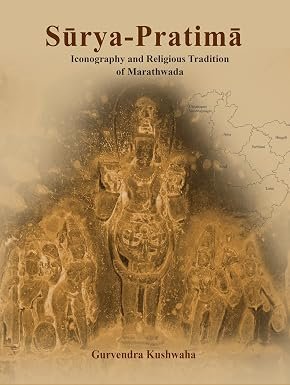
Surya-Pratima: Iconography and Religious Tradition of Marathwada
Contents: Preface. 1. Introduction. 2. Historical background of Marathwada. 3. The cult of Surya: textual and art-historical traditions. 4. Surya: an iconographic study. 5. Conclusion. References. Index.
Surya-Pratima: Iconography Religious Tradition of Marathwada is an extensive study of the Surya images from the region of Marathwada, taking into account iconographic, stylistic and textual perspectives. It has been thought that few Surya images are found in the Marathwada region and Surya was one of the lesser-worshipped deities in the region. An extensive fieldwork in the region of Marathwada for two years has resulted into finding of numerous Surya images in the region, attesting that God Surya was one of the significant deities of the Brahminical pantheon. Surya images from the museums, on the temple walls, in the shrines and loose sculptures were documented from eight districts of Marathwada.
The present monograph offers a typological analysis of the Surya images from Marathwada, based on stylistic features, the presence or absence of associated imagery, and syncretism. The iconographic analysis of Surya images based on textual (especially Silpa texts) tradition is quite interesting to underscore the association of text and image in an art-historical context. The presence of more than 75 Surya images in the region of Marathwada strongly attests to the prevalence of Surya worship in the region during the late historical and early medieval periods.
A comprehensive study of the Surya images from Marathwada has unearthed the history of Surya worship, one of the important traditions of the Smarta religion, i.e., Pancopasana, in the region of Marathwada. The present research is an important contribution to the fields of Indology, Iconography, Religious history of ancient India, and Art history of the early medieval period. This research would serve as a model for micro-study of religious imagery to locate it in the wider framework of religious history and iconographic traditions.
