Symbol, Script and Writing (From Petrogram to Printing and Further)
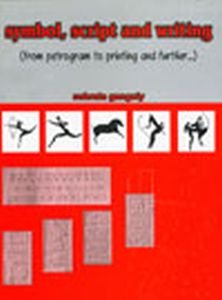
Contents: Acknowledgement. Cluewords and pagemarks. Preface. I. General view: 1. Introduction. 2. Society, language and script. II. Historical survey of script evolution: 1. Forthcoming of scripts. 2. North Semitic script. 3. Development of scripts in Europe. 4. Roman script (Latin script). 5. Invention of printing. 6. Dawn of writing European languages. 7. Script evolution in middle-east. 8. South semiotic scripts. 9. Development of scripts in India. 10. North Indian scripts. 11. South Indian scripts. 12. Some variegated Indian scripts. 13. Evolution of Indian scripts. 14. Further branches of Braahmit script. 15. Scripts in East-Asia. 16. Other important scripts in Asia. III. Realization and manifestation in Indian scripts: 1. Phonetics. 2. Indian scripts and their Roman equivalents. 3. Syllabic writing of Indian languages. 4. Singhalese alphabet. IV. Use of Computer: 1. A Warnamaalaa-keyboard. V. Inference: 1. The practice of Indian languages and scripts. 2. Epilogue. 3. Reflections. VI. India's vision: 1. R.N. Tagore. 2. S.C. Bose. 3. J.L. Nehru. 4. M.A.K. Azad. 5. R.S. Bose. VII. Bibliography. VIII. Directory: 1. List of scripts. 2. List of languages. 3. List of geographical locations. 4. List of human groups or tribes. 5. List of names. 6. List of books, inscriptions, tokens. 7. Index.
"This book attempts to deal with the old and yet very modern problem of different scripts for different languages. However, it is concerned with one people - the variegated people who make up the multi-lingual republic of modern India, with all its requirements for developing into an up-to-date commercial and industrial power-centre.
"Starting from the very beginnings of script in Egypt and Sumer, the book deals with the fascinating evolution and spread to South Asia of various scripts and their mutual influences on each other through the ages. It explains the biologic and phonetic bases of vowels and consonants.
"The Indian reader is likely to be surprised to learn about the decisive role of Sanskrit and of the great grammarian Panani in the story of the scripts and languages unfolds.
"In the end, author offers practical conclusions for a transliteration of traditional Indian scripts and symbols into simpler and computer-feasible Roman scripts which would enable an average Indian to read messages and sign-boards in various Indian languages without necessarily knowing them." (jacket)
