Symbolism: A Unique Way of Cultural Communication
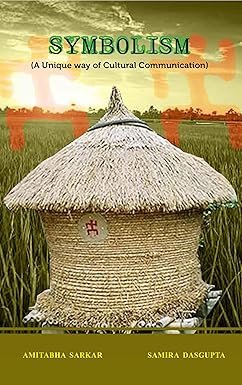
Contents: Preface. 1. Introduction. 2. Sacred drums - Role of clans among the toto. 3. Banbibi - The symbol of Gurdian Deity in Sundarban. 4. Dhatamraj - A mechanical solidarity in rural Radh Bengal. 5. Thans: The notion of symbol among the Mal Paharia. 6. Signal of engraved wooden comb in the Chignon of Muria Girl. 7. Occultism Practices: The symbol of replacing human sacrifices. 8. Bhima-Bhimin - A symbol for appeasement of rain God with cognitive view. 9. Urskul: When signage represents a symbol of honour among the Dandami Madia. 10. Epilogue. Life and Action of Studied Groups. Index.
The most fundamental way in which the procedures of present anthropologists differ from those of their predecessors a hundred years ago is that the contemporary treatment of ethnographic evidence is always functionalist. To-day, every detail of custom is seen as part of a complex whole; it is recognised that those details, considered in isolation, are as meaningless as isolated letters of the alphabet.
The modes and channels through which we communicate with one another are not only diverse but complex. In fact, these are some aspects of culture which are normative in nature. Human communication is achieved through expressive actions, such as signals, signs and symbols. These three terms are closely linked with one another. Culture is learned and acquired behaviour which is transmitted over generations. During the process of enculturation, the various signs, symbols and signals of a particular culture are also transmitted for posterity, and the value attached to the specific signs, symbols and signals, etc, is only understood by the distinct cultural group. These are a kind of cultural communication within their ethnic group.
According to Leach (1976) human communication is achieved by means of expressive actions which operate as signals (which are mundane), signs (which are mundane as well as abstract), and symbols (which are abstract). These cultural traits of a community, that is, signals, signs, and symbols, which are significantly their own cultural ethos, that is again intrinsic and value loaded cultural behaviours; that are considered as a vehicle of communication, which are transmitted over generations.
The present treatise will highlight with the help of those abstract attributes, how a society can be anthropologically explored with long term participant observation, which is ignored by most of the present scholars. The sustainable development of a community is also possible with the help of this kind of culture communication prevalent among them, which is very much value -loaded. With the help of their cognitive view, as well as componential analysis of those, it will be fruitful for the execution of any developmental programme in the community. Scholars and NGO’s will benefit from launching - any sustainable developmental programmes considering the above cultural attributes.
