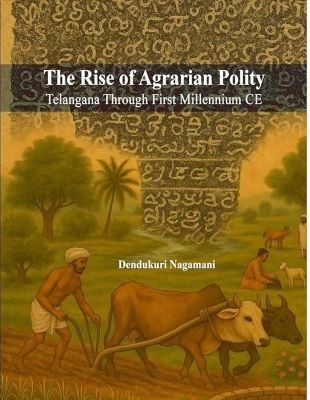
The Rise of Agrarian Polity: Telangana Through First Millennium CE
Contents: Introduction. 1. Early agrarian societies. 2. Through mid-millennium. 3. The rise of agrarian polity. 4. Millennium social scapes. 5. Resource management. 6. Expanding ambits. 7. Overview. References. Glossary. Index.
Telangana the region of present study in central Deccan is defined here in terms of its historical personality that had evolved through the epochs of history. The geography of the region is practically agrarian as reflected in its physical, human and ecological personality. It is indeed fascinating to study how the early farmers of this region could cope with the crop moisture requirements and have a sustained practice of agriculture. It is important to note that, the agrarian activity could survive the political vicissitudes. The study, thus tries to locate the crucial links between the rural administration and the state apparatus held through an organized system of grants of land, money, commodities and revenue sanctions. Present endeavour is towards understanding the rise of agrarian policy through the documents of history.
The early historic to the early medieval period was defining in terms of evolving regional personalities and patterns of interaction as most of the politico-economic activity was extended over the resource potential areas. The period also marks the processes of integration of the geo-political identities. The various records of the period testify to this constant negotiation towards agrarian expansion. By the turn of the first millennium CE, the agrarian power comes to assume a defining role as we can see the continued absorption of the occupational groups into decision making process and relative autonomy of the village structures and a steady rise of power groups firmly based in the agrarian milieu.
