The Collected Works of Lala Lajpat Rai, Vol. 15
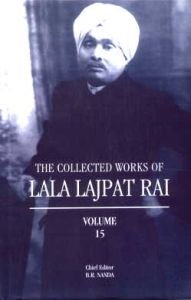
Contents: 1. The Indian National Congress. 2. In the Central Legislative Assembly. 3. Simon Commission. 4. Nehru Report. 5. The Punjab Politics. 6. Communalism. 7. Personal. 8. Miscellaneous. 9. Last Phase. Index.
"Lala Lajpat Rai was one of the outstanding leaders of modern India, a contemporary of Dadabhai Naoroji, Tilak, Gokhale and Gandhi. His public life spanned the last decade of the nineteenth century and the first three decades of the twentieth century. He practised law at the Lahore Chief Court and built up a lucrative practice, but was drawn very early into public activities pertaining to religious, educational and social reforms and then into nationalist politics. Lajpat Rai was one of the foremost leaders of the Indian National Congress. His arrest and deportation without trial to Burma in 1907 created a great sensation in India. He spent the war years (1914-18) in the United States propagating the Indian case for self government. He returned to India in 1920 and had the honour of presiding over the Calcutta Session of the Indian National Congress which approved of Gandhi\'s campaign for non cooperation with the government. He was deputy leader of the Swaraj Party in the Central Legislative Assembly and played a prominent role in provincial as well as national politics in the 1920s. While leading a demonstration against the Simon Commission at Lahore in 1928 he received injuries in an assault by the police which hastened his death.
The fifteenth volume covers the year 1928. During this period Lajpat Rai was mainly occupied in mobilizing public opinion in favour of the Nehru Report and the movement for boycott of Simon Commission.
For Lajpat Rai the appointment of Simon Commission was a negation of India’s right to have any voice in the determining of its future constitution. His mind was made up to boycott it. He led a vigorous campaign against the Commission both in press and from platform. The movement was a great success.
Lajpat Rai welcomed the Nehru Report and called it “A monumental document worthy of the best traditions of Indian public life. Its solutions of the communal questions may not be acceptable to the diehards but they are backed by reasons and god sense.” He warned “those who will oppose it will practically oppose Swaraj and may be justly described as the enemies of India.” He travelled across the country to popularize its recommendations.
Lajpat Rai while leading the demonstration against the Simon Commission on 30 October at Lahore was brutally beaten by police withy lathis. He did not survive the assault long. He died on the morning of 17 November at Lahore and thus ended a long career of distinguished public service.
Jawaharlal Nehru wrote in his autobiography. “Lalaji felt angry and bitter, not so much at the personal humiliation, as at the national humiliation involved in the assault on him.”(jacket)
