The Peripheral Centre : Voices from India\'s Northeast
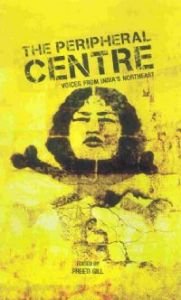
Contents: Introduction. Engaging with the Northeast: the outsider looks in/Preeti Gill. 1. Northeast India: beyond counterinsurgency and developementalism/Sanjib Baruah. 2. From a reporter\'s diary: an introduction to Northeast India/Rupa Chinai. 3. In times of conflict the real victims are women/Sanjoy Hazarika. 4. Arunachal Pradesh--The insurgency scene/Mammang Dai. 5. Tree Sans Roots? The story of the Khasi-Jaintia Borderlanders/Sanjeeb Kakoty. 6. Shifting sands: negotiations, compromises and rights in situations of armed conflict/Roshmi Goswami. 7. \'Benevolent subordination\': social status of Naga women/Temsula Ao. 8. Khasi matrilineal society: the paradox within/Esther Syiem. 9. Status of Mizo women/Lal Dena. 10. Meira Paibi: the role of women\'s movements in Meitei society/Nandini Thockchom. 11. Crab Theology: women, Christianity and conflict in the \'Northeast\'/V. Sawmveli and Ashleytellis. 12. Contested fields: reflections on gender and development in Northeastern Indian/Sumi Krishna. 13. Socio-economic realities n Nagaland/Rahul Goswami. 14. Conflicts and constructive work: strengthening civil society in the northeast/Monica Banerjee. 15. HIV and women in the northeast/Shyamala Shiveshwarkar. 16. Even if we shout there is no one to hear\': reproductive health issues among the marginalized population of Nagaland/Rupa Chinai. 17. Health and torture/P.Ngully. 18. Restoring order in Manipur: the drama of contemporary women\'s protests/Deepti Priya Mehrotra. 19. Who killed Mother Teresa? Children of the conflict/Mitra Phykan. 20. Women writing in times of violence/Tilottoma Misra. 21. Performance: the gendered space in Manipur/N. Vijayalakshmi Brara. 22. Manipur burning: voices in protest. 23. The flight of the 18 white Egrets/M.K. Binodini. 24. Red is the colour of blood/Easterine Iralu. 25. Dealing with conflict and violence: the power of attitude/Sumita Ghose. 26. Mosaic: four interviews. Acknowledgements.
"When Thangjam Manorama was arrested and killed by the Assam Rifles in July 2004 in Manipur, it unleashed a protest the likes of which no one had witnessed. In some ways this was one of the triggers for this collection--to provide a space to women and men from the "Northeast" to tell us about the issues that confronted them daily, to talk about the pressures, the insecurities, the uncertainties confronting them in an area that has been facing low intensity warfare for decades. It is now many years since that incident but it is an image that has stayed in the mind, transformed into an icon of protest in the popular imagination.
The anger and the frustrations of the Manipuri Women who staged that dramatic protest after Manorama\'s killing have in many ways been vindicated. In fact, each essay in this book brings to mind that troubling image, each contributor points to the Manipuri women, holding them up as a flat of rebellion, of protest, of questioning. Each essay questions issues of nation, identity, of what makes the people of the northeast so alienated from the "mainstream"--some do it in a straightforward way and some refer to it obliquely. Many of the contributors are writers, academics of activists from the Northeast but there are many who are, like the editor, "outsiders". But "outsiders" who share a passion for the region and an intense desire to see change, to see peace.
This anthology seeks to give voice to the many issues and concerns that have emerged as a result of the last three decades (and more) of conflict and violence that has besieged the seven states of India\'s Northeast. These conflicts have been intense and protracted and have had devastating and long-term effects on local communities. The impact has been particularly complex for women who have faced greater violations against their persons at the hands of the state\'s armed forces as well as exploitation by non state actors. All the articles in this volume are intensely personal responses to what is happening in the northeast, to the changes, the growing asymmetries and faultlines that are causing enormous rifts in the region. The essays, first person accounts and interviews present a picture of what it means to live in the northeast."
"When Thangjam Manorama was arrested and killed by the Assam Rifles in July 2004 in Manipur, it unleashed a protest likes of which no one had witnessed before. This was one of the triggers for this collection - to provide a space for women and men from the \'Northeast\' to tell us about the issues that confronted them daily, to talk about the pressures, the insecurities, the uncertainties confronting them in an area that has been facing low intensity warfare for decades.
The anger and the frustrations of the Manipuri women who staged that dramatic protest after Manorama\'s killing have in many ways been vindicated. Each essay in this book brings to mind that troubling image, each contributor points to the Manipuri women, holding them up as a flag of rebellion, of protest, of questioning. Each essay questions issues of nation, identity, of what makes the people of the Northeast so alienated from the \'mainstream\'. Many contributors are writers, academics or activists from the Northeast but there are many are, like the editor, \'outsiders\'. But \'outsiders who share a passion for the region and an intense desire to see change, to see peace."
