The Presidential Retreats of India
Contents: Foreword. Preface. 1. From the Hugli to the Himalaya/Gillian Wright. 2. The colonial backdrop to the Western Himalaya/Yashaswini Chandra. 3. The Palace and the retreat/Deepak Gahlowt. 4. Life at Mashobra/Gillian Wright. 5. Butterflies of the retreat/Peter Smetacek. 6. The Supreme commander’s southern retreat: Bolarum/Anuradha Naik. 7. Of Presidents, residents and their residence: the story of the Rashtrapati Nilayam/Anuradha Naik. 8. The Southern Sojourn/Gillian Wright. 9. Herbal gardens of Rashtrapati Nilayam. Bibliography.
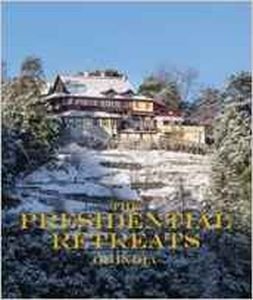
The presidential retreats, both 19th century heritage buildings, are the lesser known residences of the President of India. Not far from Shimla and surrounded by over a hundred acres of forest, is the picturesque hill station villa known as The Retreat, Mashobra, once the weekend home of the viceroy. In the Deccan, within peaceful Secunderabad cantonment, stands the Rahtrapati Nilayam, the colonial bungalow that served for over a century as a home of the British resident at the court of the nizam of Hyderabad, the largest of the princely states.
In this volume, the authors trace the history of grand city residences and rural retreats from the time of the construction of Government house, Kolkata (now Raj Bhawan), and the riverside retreat of Barrackpur. They look afresh at the presidential retreats imposing partner buildings Shimla’s Viceregal Lodge (later the Rashtrapati Niwas and then the Indian Institute of Advanced Study) and the Residency, Hyderabad and throw new light on the context of the retreats by analyzing the development of hill stations and the evolution of Hyderabad’s military cantonments. For the first time, they bring to the public eye, the retreats themselves, their architecture and interiors. Through first-hand accounts, they describe life as it was and as it is lived at the retreats, where presidents have traditionally come both to relax and more importantly, to meet and make themselves accessible to the people of India.
This is one of a series volumes documenting different aspects of the rich cultural, social and historical legacy of Rashtrapati Bhavan as a national institution. (jacket)
