The Rohingya: An Ethnography of 'Subhuman' Life
Contents: Acknowledgments. Glossary. Abbreviation. List of tables. List of photographs. Chapter-one:Introduction: The Rohingya, their Textual (Re) presentation, and A Contextual Framing Chapter-Two: Who are the Rohingyas? Life through Roshang, Arakan, and Rakhine state Chapter-Three: Of Hurting and Hosting: The Rohingyas in the Place of Migration Chapter-Four: State of Stateless People: The Struggle for Existence and the Cry for Survival Chapter-Five: The (Re) production of Vulnerability: State in Everyday life of Stateless Rohingyas Chapter-Six:The Story of the 'Subhuman' Life: Untold Pains and Miseries, and Uncertain Futures Chapter-Seven: Theorizing 'Subhuman': Treatments of Rohingyas as if lesser than human being Chapter-Eight: Conclusion: Looking forward Bibliography Appendix Index
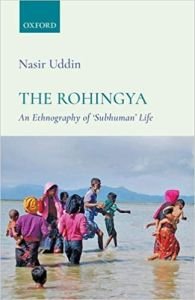
The Rohingyas are one of the most persecuted ethnic minorities in the world. They used to live in the Arakan/Rakhine State of Burma/Myanmar for centuries, though it is a predominantly Buddhist country. Being victims of persecution as a result of ethnic cleansing and genocide, they started migrating to neighbouring countries from 1978, and after the massive migration August 2017 onwards, about 1.3 million Rohingyas now live in the south-eastern part of Bangladesh.
This book offers a comprehensive portrait of how the state becomes instrumental in producing 'stateless' people, wherein both Myanmar and Bangladesh alienate the Rohingyas as illegal migrants, and they have to face unemployment, mental and sexual abuse, and deprivation of basic human necessities. The Rohingya proposes a new framework and theoretical alternative called 'subhuman life' for understanding the extreme vulnerability of the people as well as the genocide, ethnocide, and domicide taking place in the region. With several concrete ethnographic evidences, Nasir Uddin, apart from reconstructing the Rohingyas' regional history, sheds light on possible solutions to their refugee crisis and examines the regional political dynamics, South and Southeast Asian geopolitics, and bilateral and multilateral interstate relations.
