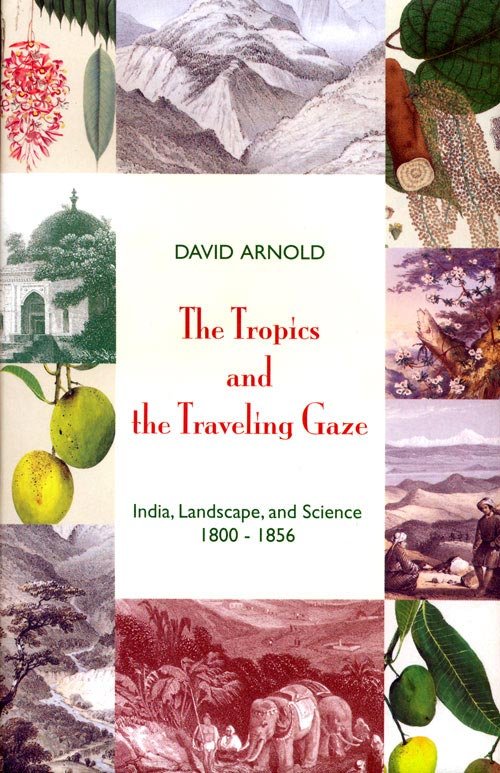
The Tropics and the Traveling Gaze : India, Landscape, and Science 1800-1856
Contents: Introduction. 1. Itinerant empire. 2. In a land of death. 3. Romanticism and improvement. 4. From the orient to the tropics. 5. Networks and knowledges. 6. Botany and the bounds of empire. Conclusion. Notes. Bibliography. Index.
"This is a book about land, as well as about India--as that region of almost continental proportions came to be known to European travelers in the first half of the nineteenth century. But it is also a book about the land, about the ways in which India's material environment became increasingly subject to scientific scrutiny, much of its by itinerant naturalists and--centrally to this study--by botanists. Science and travel in colonial India is seen here as part of an interrelated process of observation and appropriation.
The Tropics and the Traveling Gaze is concerned with responses to an unfamiliar landscape, about the land as an object of colonial fear and desire, utility and aesthetics; it seeks to show how India, in passing under British control, was evaluated in ways that combined scenic delight and practical opportunity with a harsher appraisal of the country as a land of death and disease, of desolation and deficiency.
It is an attempt to understand how India, while recognized as having its own distinctive physical and cultural identity, was nevertheless annexed to ideas of landscape and nature that were external and alien to itself, which aligned it, in science as in sentiment, with other places and other times. This is not an environmental history in the conventional sense. Rather, it seeks to examine how, at a time when the now pervasive term "environment" was never employed (at least in its present sense), nature and the human place within it were scientifically interrogated and systematically understood.
Central to the argument of this book is the conviction that landscape and nature, far from being peripheral or merely decorative, were central to the colonizing process. This was an appropriation of India in its way as fundamental to the colonial enterprise as any story of conquering armies and imperial bureaucracies." (jacket)
