Transforming Delhi
Contents: Preface. Foreword. 1. Transforming Delhi. 2. Local planning that empowers citizens. 3. Slum rehabilitation and housing for all. 4. Unauthorised colonies and informal settlements. 5. Governance with a civic sense. 6. A City of education and Skills. 7. A Healthy city. 8. Built environment for elderly and physically challenged. 9. Potable water for all. 10. Affordable and sustainable electricity. 11. Drainage and storm water management. 12. Making Delhi free from open defecation and urination. 13. Sewerage and sanitation for unplanned areas. 14. Solid waste management. 15. A City by the river Yamuna. 16. A City of Ganga-Jamuni Culture and heritage. 17. Safe and Sustainable urban mobility. 18. A city of gardens and urban farming. 19. A safe and gender sensitive city. Bibliography.
Delhi, a megacity of 16.75 million and capital of India, has been a model of urban development for many others cities in India. It also faces a chronic shortage of housing, water, electricity, drainage, sanitation, education and health infrastructure. The poor and women are often marginalized. The common citizens struggle for simple needs like admission of their children to nursery schools, affordable electricity, water and healthcare. The National Capital has to be more egalitarian, inclusive and sustainable, which caters to all the citizen, with special attention to poor, women and children.
This book charts out a roadmap for transformation of Delhi. It provides a new paradigm of urban planning and transformation where people decide about local issues, policies plans and investments. This means a shared and decentralized planning and equitable allocation of resources, space and land.
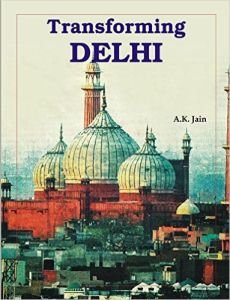
Transforming Delhi is an amazing encounter for professional planners and laymen alike. What is most interesting about Transforming Delhi is that it visualizes the city from the “other way around” A.K. Jain integrates solid waste management, sanitation, sourcing potable water, recycling grey water, harvesting storm water, and creating sustainable energy into his vast conceptual landscape of the city of the future. (jacket)
