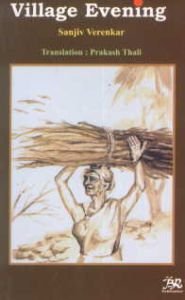
Village Evening
Contents: Foreword. Preface. 1. Birds. 2. A poem only. 3. Satellites. 4. Tree of poetry. 5. "Moombar". 6. My arrival. 7. No times. 8. Spike of corn. 9. Outward show. 10. You. 11. My sole relative. 12. why boil?. 13. Ask you must. 14. Everything so different. 15. Packet of reminiscences. 16. Give us strength. 17. Death of a Drunkard. 18. Arrival in thousands. 19. Village of my dreams. 20. The ember. 21. A poem. 22. Myself. 23. The bird. 24. My childhood. 25. We shall twinkle. 26. Harvest of tears. 27. Birth. 28. Rains. 29. Concrete jungles. 30. Now sing a little. 31. Smiles. 32. Peepal amidst pedestal. 33. Drum. 34. Palanquin. 35. I want a house. 36. Birdie, my dear. 37. Materialistic monster. 38. The Lord. 39. Artificial flowers. 40. Why live?. 41. I Swim. 42. Rains of different phases. 43. The door of light. 44. Nature. 45. Life. 46. Passenger. 47. No roots as yet. 48. Poems of Moonshine. 49. Our poems are different. 50. In the concrete jungle. 51. Despite reluctance. 52. Deprived of "Prasaad". 53. Oh Banyan tree. 54. childhood. 55. If I were a dog. 56. Evening in my Village. Glossary.
"Most of Verenkar\'s poems rotate around themes of village life, its landscapes, the erosion and corrosion of social values. His words become cinders while delineating socialistic content, revolt and rebellion. However, he writes quite sensitively when he deals with emotional themes, delicate issues and nature. There are quite a few recurring themes like urbanization, insensitivity of humans, nostalgia and disintegration of joint-family system.
He often juxtaposes urban life with rural and is always concerned with delineating the contrast between the two. Obviously, he finds it difficult to reconcile with the changing times and elements brought in by changing social order.
He is forced to be an urbanite despite his reluctance. Yet, he handles his emotions and words quite delicately at times as the dictum goes: \'Delicate instruments should be handled delicately.
Writer\'s and poets are, roughly speaking of two distinct kinds; some who have something\'s to say and other, who have to say something.
Sanjiv obviously belong to the first category. He has a lot to say and whatever he does manage to express, he does so quite effectively.
There is a distinct note of complaining about the fact at the universal phenomenon of bigger fishes swallowing the smaller ones and huge trees casting thier suppressive shades or shadows over the minor growth underneath, often eclipsing the latter altogether.
This leads him to accept a social commitment that he too, as a human being himself or his poetry should not follow this selfish path\' He is a socialist, not only on his poetry but also equally, if not more, in real life.
This particualr transparent aspect of his personality, a rare traint to be found these days, is one of the most pleasant features of this activist named Sanjiv Verenkar, which has always impressed me in my assoication with him over the last more than two decades." (jacket)
