World Mythology
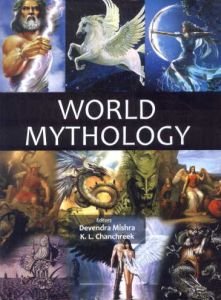
Mythology created and shaped mostly in prehistory period by chiefs of tribes and races, kings, priests, bards and poets is a very wide and fascinating subject. It is an essential part of religion and culture, a symbolic narrative of godly personalities supposed to be helpful to the mankind. Hidden ideas and thoughts of a society, covering wide cultural traditions, heroism, bravery, adventures, victory in wars, romance, desperation and very social issue is reflected in mythology.
Many Western and Oriental Scholars have scripted the creation myth theory according to the available mythical sources in Europe, Asia, Africa and American creation legends. One thing is also common in mythologies that the created gods and goddesses, possess divine and celestial powers and supernatural attributes and behave like human beings.
The present encyclopedic study World Mythology, based on authentic sources includes interesting and fascinating narratives on ancient powerful deities, culture heroes, warriors, celestial nymphs as well as enemies of gods and goddesses, found in primitive and ancient mythologies of the world. These mythical figures are symbols of man’s material and spiritual progress. They are testimony of highly developed civilizations and rich cultures of the prehistory period.
The wonderful and fascinating epic poems and sagas, legends and tales of these gods and goddesses and supernatural beings often invoked and highly reverenced in various ancient cultures may be the things of the past, but even today they represent some primitive scientific wisdom, historical events, cultural and moral values endowed with mythic-mystic and supernatural characteristics.
The present study covers some of the world’s ancient mythologies including African, Australian, Aztec, Celtic, Chinese, Egyptian, Finnish, Greek, Inca, Japanese, Mayan, Melanesian, Native Americans, Norse, Persian, Polynesian, Roman, Semitic and Siberian.
The attractive supernatural mythologies woven in cultures, found mostly in sacred and religious texts, classical sagas and epics around the world attracted the attention of the European and American scholars during 18th and 19th centuries. In Renaissance period mythologies were themes of great attraction.
The classical Greek and Roman Mythology to that of Egyptian and Mayan, show the wonderful creativity of man, his farsightedness and vision, his bravery and heroism, wisdom and craftsmanship. So, also other world mythologies.
There are many similarities in mythological legends world over. For example, (i) nearly all myths feature a global flood or deluge giving rise to the origin of the world, (ii) many religious myths believe in gods and goddesses and their enemies being demons and monsters, (iii) many myths have faith in paradise and underworld after death, (iv) it is generally believed the chief of the tribe or race, the kings and priests served as links between gods and human beings, (v) many myths believe in angels, messengers of god and nymphs as celestial beings, (vi) the concept of immortality is found in all the mythologies and (vii) in all mythologies there are gods of fertility, water, rainfall, crops, sea, light, fire etc. goddesses are shown as queens of gods symbolizing romance, love and fertility.
Myths are mirrors of cultures. They help in studying human society, geographical destinations, vast mineral resources, prevailing social customs, beliefs, and behaviours in a social set up.
The present study will add to our knowledge of the religion and mythology of ancient world civilizations and cultures.
